Demand for Bryan-College Station Office Space Is Rising as Major Cities Face Vacancies
Vacancy rates reflect the imbalance. While many major Texas metros are seeing office vacancy rates climb above 20 percent, Bryan–College Station office space vacancy sits closer to 8 percent, one of the tightest markets in the state. In other words, companies here are not trying to shed office space. They are trying to find it.

Across the United States, office towers are sitting empty.
Cities like San Francisco, Houston, and Austin are dealing with rising vacancy rates and an uncertain future for downtown office districts.
But for Bryan–College Station office space, the problem is the opposite.
Companies here are not trying to get rid of office space. They are trying to find it.
According to the Texas Real Estate Research Center at Texas A&M University, the Bryan–College Station metro has roughly 7.5 million square feet of office inventory. That equates to about 26 square feet per resident, significantly below the Texas average of 37 square feet per person.
Vacancy rates reflect the imbalance. While many major Texas metros are seeing office vacancy rates climb above 20 percent, the Bryan–College Station office space vacancy rate is closer to 8 percent, one of the tightest markets in the state. In other words, companies here are not trying to shed office space. They are trying to find it.
Bryan-College Station Office Space: A Growing Market, A Limited Supply
The region’s economic momentum has accelerated in recent years. The Bryan–College Station metro has ranked among the top-performing mid-sized economies in the United States, driven by population growth, innovation coming out of Texas A&M, and major investments in research and advanced manufacturing at the RELLIS campus.
This expansion has created strong demand for professional office environments, particularly Class A space designed for modern companies.
For years, much of the region’s workforce operated either within university facilities or in smaller, older office buildings that were never designed for today’s technology-driven businesses.
As companies grow and new firms enter the market, the gap between supply and demand has become increasingly clear.
Enter The Lumin at Lake Walk
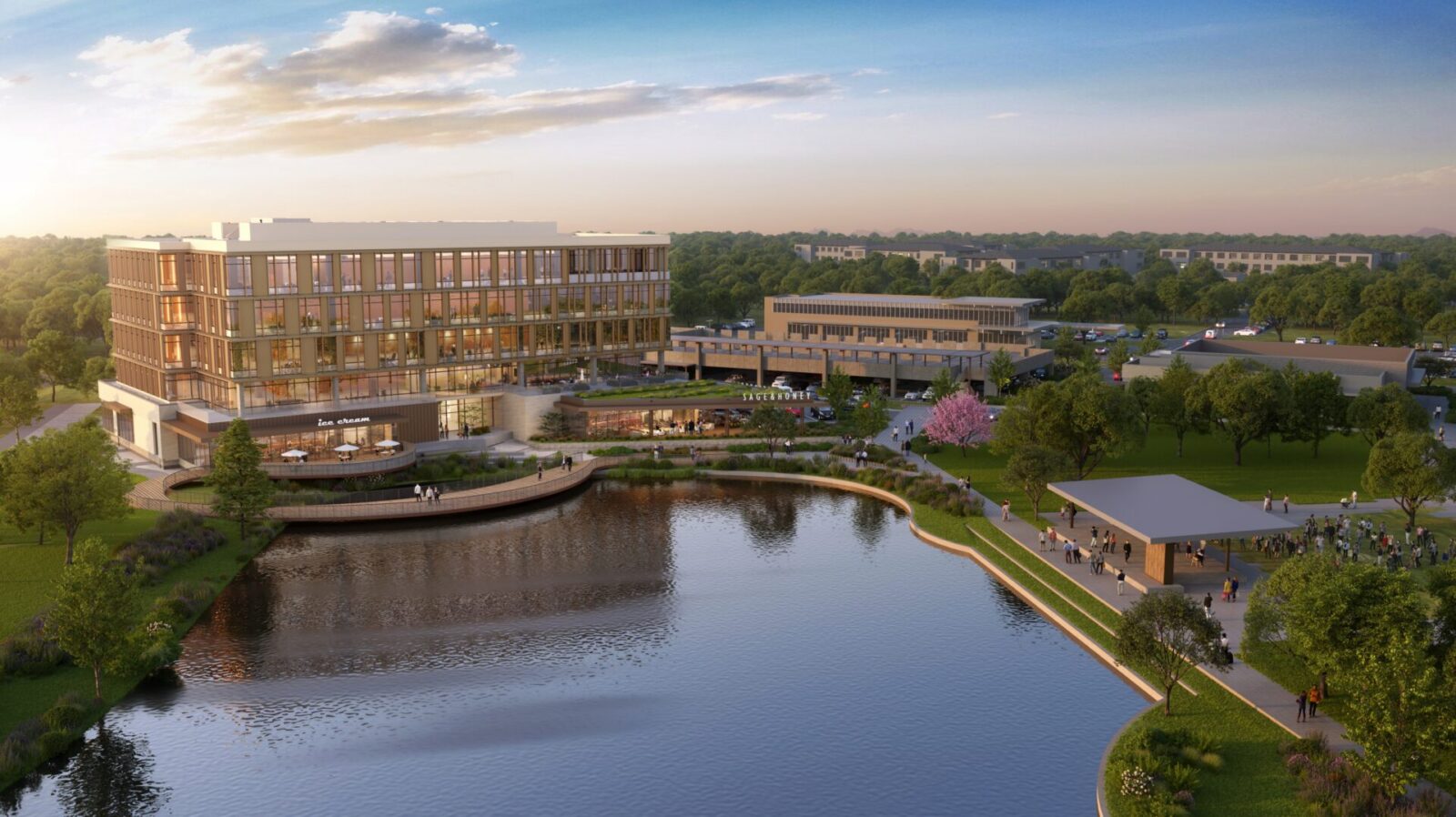
The Lumin represents a new generation of development for Bryan–College Station office space.
Located in Lake Walk, The Lumin introduces approximately 100,000 square feet of Class A office space, designed to support companies that want both professional infrastructure and an elevated workplace environment.
Unlike traditional suburban office parks, The Lumin is part of a vibrant mixed-use destination where work naturally blends with hospitality, dining, and community. Tenants and their teams are surrounded by a growing collection of locally loved restaurants and gathering places, making it easy to step out for a client lunch, casual meeting, or afternoon break.
Within walking distance are favorites like Campfire, known for its traditional Texas fare, Kanji Sushi for elevated Japanese cuisine, POV Coffee for morning meetings or midday caffeine, and The Board Room, a charcuterie and wine shop that doubles as a social hub.
Just steps away, The Stella Hotel offers upscale, award-winning accommodations, meeting spaces, and a resort-style atmosphere ideal for hosting visiting clients or company events. Nearby wellness and lifestyle destinations, including Woodhouse Spa, Studio Muse, and 6Whiskey, further add to the daily experience, alongside walkable green spaces and outdoor gathering areas designed to encourage collaboration, creativity, and community.
At The Lumin, the office does not end at the lobby doors. It extends into a curated environment where business, hospitality, and lifestyle intersect. For corporate decision-makers, site-selection professionals, and growing firms, this type of integrated environment is increasingly important. Employees want workplaces that are connected to lifestyle amenities, not isolated from them.
Meeting the Next Phase of Growth
Bryan–College Station has long been powered by the intellectual engine of Texas A&M University. What we are seeing today is the next phase of that evolution as research, entrepreneurship, and corporate investment expand into the private sector economy.
The challenge is ensuring the built environment keeps pace.
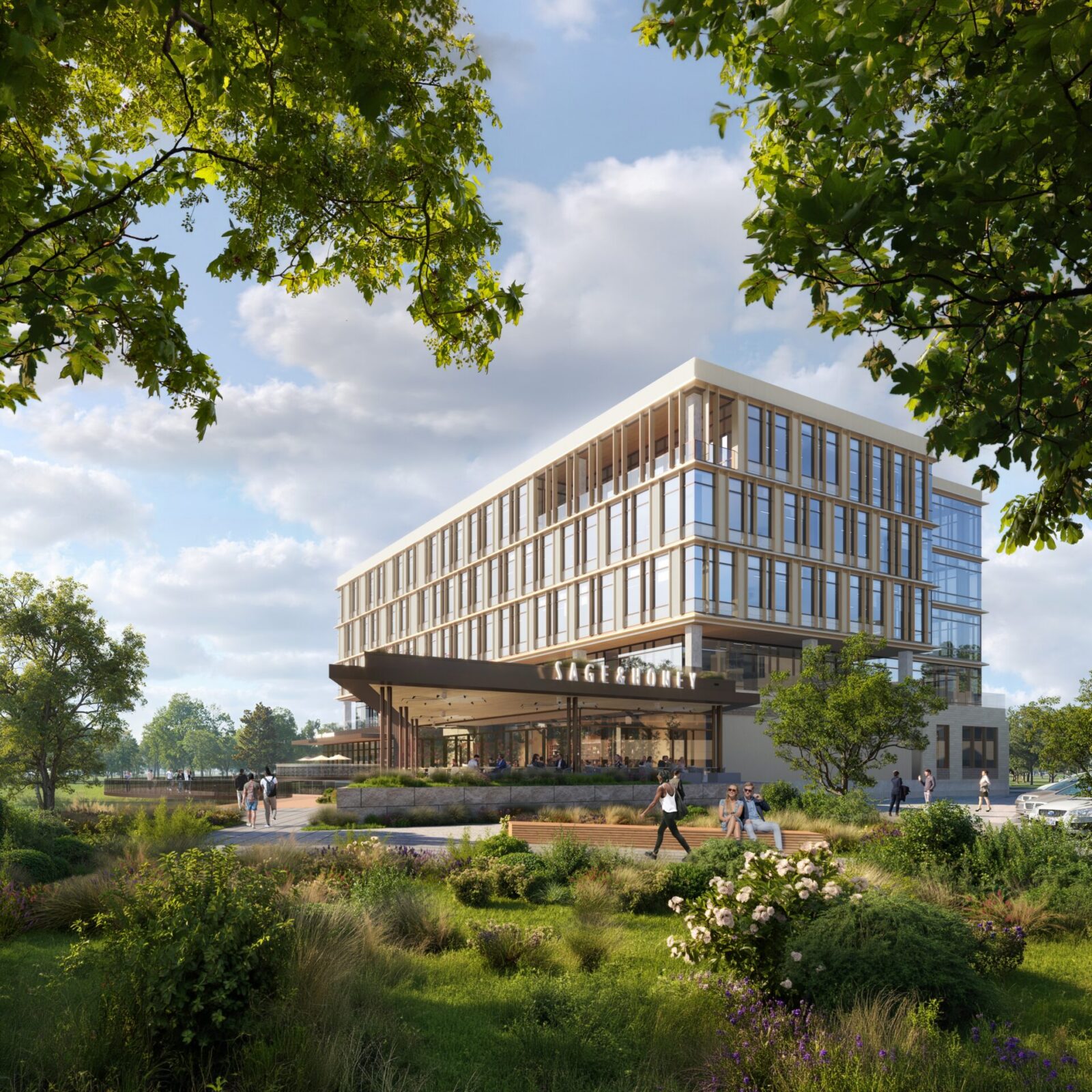
Projects like The Lumin are helping bridge that gap by introducing the type of high-quality workspace that growing companies expect while maintaining the character and connectivity that define the Lake Walk district.
At a time when many cities are asking what to do with empty office buildings, Bryan–College Station is asking a different question.
How do we build enough space for what comes next?
The Lumin at Lake Walk is part of that answer.