
What SpaceX’s Terafab Could Mean for Lake Walk, Texas A&M, and the Future of Central Texas
If SpaceX's Terafab project lands in Grimes County, Lake Walk is already built for what comes next.

Texas has always had a habit of reinventing itself through geography. First, it was cattle trails. Then the oil fields. Then, biomedical corridors and semiconductor plants. Entire economies have emerged around a highway exit, a rail line, or a patch of land most people drove past for decades. Right now, Grimes County might be about to turn the page on a whole new chapter of Texas innovation.
SpaceX is reportedly evaluating sites near Gibbons Creek Reservoir for what could become one of the most ambitious industrial projects in modern Texas history: Terafab, a massive advanced computing and semiconductor manufacturing facility. Early estimates place the project at roughly $55 billion, with long-range projections suggesting investment that could eventually climb past $100 billion.

That is the sort of number that changes the way people talk at commissioners’ court meetings and economic development lunches. It is also the sort of project that creates a very predictable secondary effect. When a major project arrives, other industries follow. Not directly next door, but close enough to access the opportunity, be a part of the ecosystem, and serve the needs of thousands of jobs that these projects bring.
For decades, communities across Texas have learned that lesson firsthand. Dallas did not become Dallas because of one industry. Houston did not become Houston because of one refinery. Entire ecosystems grow around major investments. Suppliers arrive. Startups appear. Service firms follow. Investors and talent move in. Restaurants, hotels, and gathering spaces become economic infrastructure, not just amenities.
Factories build economies. Communities sustain them. And that distinction may matter as much as anything if Terafab becomes reality.
Terafab: Just 20 Minutes from Lake Walk
Only about twenty miles west of the proposed Grimes County site sits Lake Walk, Bryan-College Station’s innovation hub, a mixed-use community built around a different philosophy: create the ecosystem first.
For years, Lake Walk has quietly assembled pieces that many emerging business hubs eventually scramble to create after growth arrives. Research facilities. Hospitality. Walkable amenities. Dining. Office environments. Public gathering spaces. Access to Texas A&M talent. The development has often been described less as a traditional project and more as a campus designed around innovation and quality of life. The distinction sounds subtle until you consider how companies think today.
Bryan-College Station has always occupied an unusual position in Texas. Important, certainly, but often viewed as a place people passed through on the way to somewhere else. A university town. An Aggieland outpost. A stop between larger destinations, but in the last few years, that has changed.
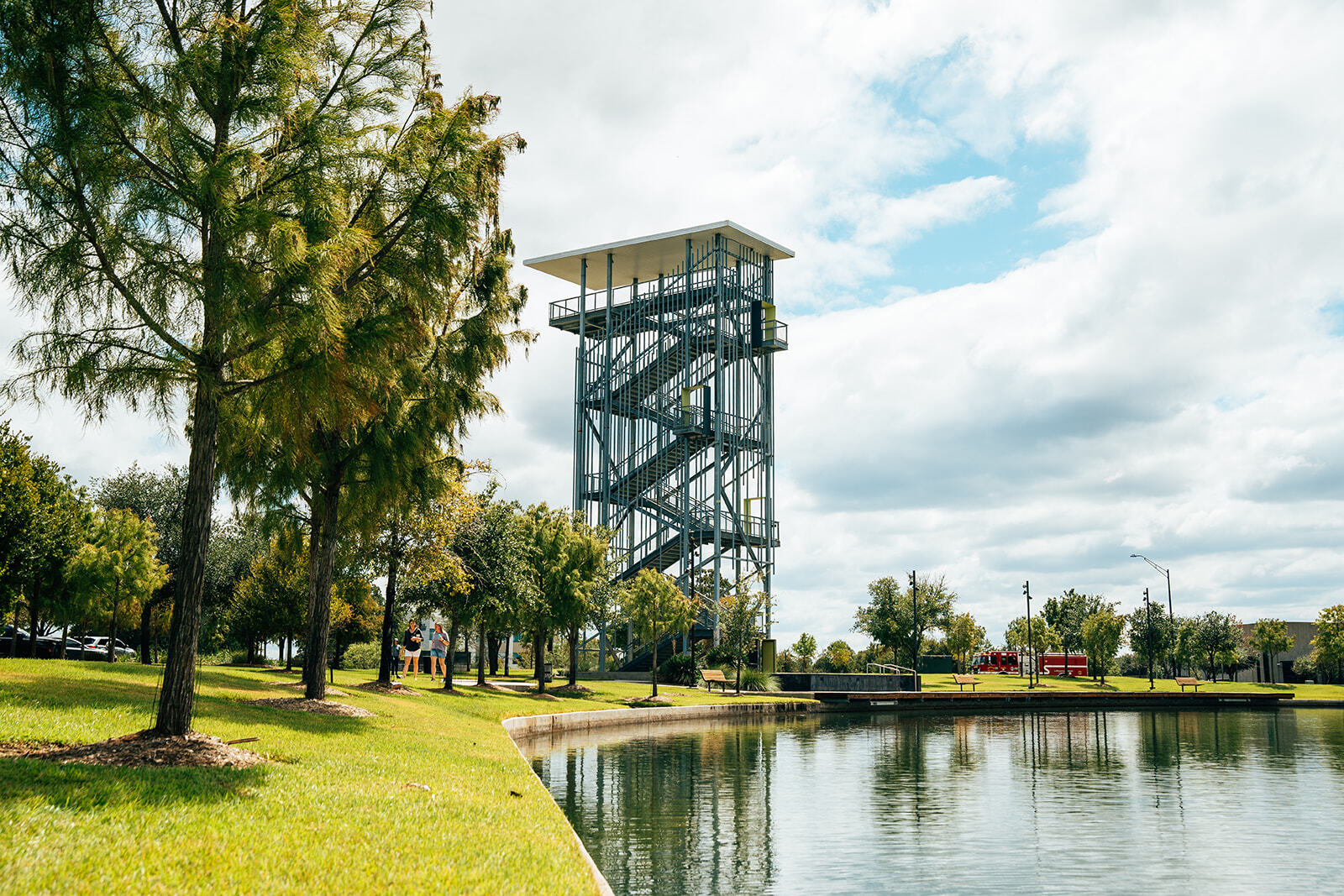
Geographically, the region sits inside one of the most powerful economic engines in America: the Texas Triangle. The corridor connecting Dallas, Houston, Austin, and San Antonio accounts for the vast majority of the state’s population and economic activity. Millions of people, global corporations, research institutions, ports, manufacturing centers, and investment capital all move through this geography. Economists have long viewed the Triangle not as separate cities, but as an emerging mega-region increasingly functioning as one interconnected economy.
Bryan-College Station sits at the center of that map, roughly equidistant from several of Texas’ largest markets. Close enough to access the resources of major cities, yet removed from many of the costs and congestion that increasingly accompany them.
The broader opportunity, beyond the Terafab, also extends beyond a single project announcement. Just west of Lake Walk, the region is already assembling pieces of a larger technology and research ecosystem. Texas A&M-RELLIS Campus has become a growing hub for advanced research, workforce development, and industry collaboration, while the Texas A&M Semiconductor Institute is helping position the university system as a national player in semiconductor research, fabrication partnerships, and talent development.
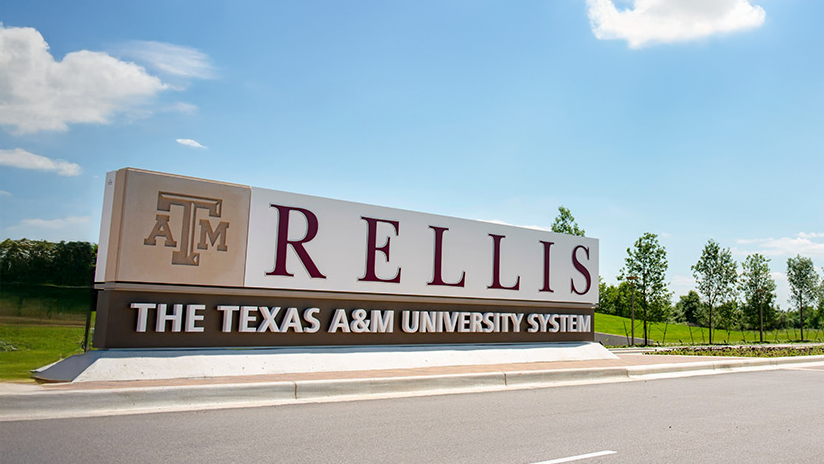
Viewed together, the pieces begin to form a larger picture. RELLIS creates a bridge between research and industry. Texas A&M develops talent and semiconductor expertise. Lake Walk offers the environment where companies, entrepreneurs, and investors can gather and grow. Innovation rarely succeeds in isolation. It succeeds when ecosystems begin connecting to one another.
For much of the twentieth century, corporate site selection revolved around straightforward math. Taxes, transportation access, labor costs, and utility rates drove decisions. Those factors still matter, but increasingly executives are wrestling with another question:
Where do talented people actually want to live and work?
The answer increasingly extends beyond office square footage.
Technology companies compete for engineers who can work nearly anywhere. Startups chase investors and collaborators. Creative firms seek environments where meetings happen naturally rather than by appointment. Young professionals often prioritize community and experience with the same seriousness that previous generations once reserved for corner offices.
Recruitment has become lifestyle marketing, and the places winning those battles increasingly resemble communities rather than business parks.
The development’s newest office project, The Lumin, positions itself as Bryan-College Station’s first waterfront Class A+ office environment and is designed around the type of companies increasingly seeking flexible, experience-driven workplaces.
The Lumin At The Heart of Lake Walk
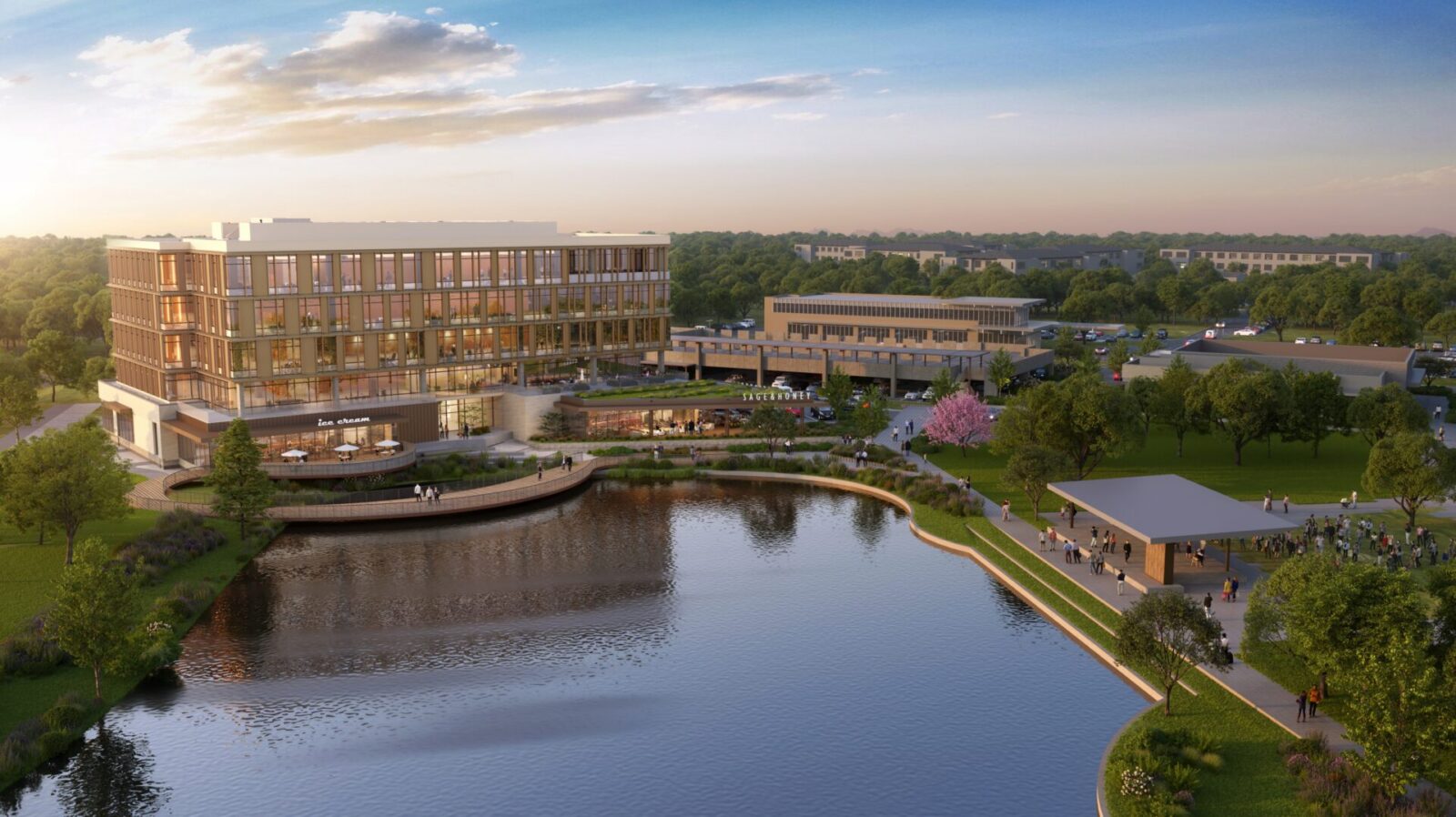
With the possibility of Terafab on the horizon, the timing of The Lumin is perfect. Because if Grimes County becomes a center for advanced manufacturing and computing, the surrounding region will not simply absorb jobs. It will absorb demand.
- Demand for office space.
- Demand for hospitality.
- Demand for startup support.
- Demand for professional services.
- Demand for gathering places where people can meet, collaborate, recruit, and build companies around whatever comes next.
Communities often spend years reacting to growth after it arrives. Lake Walk has been building an ecosystem that has already attracted leaders in innovation like Fujifilm Diosynth Biotechnologies, BlueForge Alliance, Capital Farm Credit, and others. They have all chosen Lake Walk thanks to its thoughtful design, access to award-winning hotels, restaurants, shopping, and recreation.
SpaceX has not made a final decision. Questions remain around infrastructure, incentives, and long-term impacts on Grimes County. Local discussions are still unfolding. Still, the possibility alone changes the conversation. The Brazos Valley and Bryan-College Station are being seen on the national stage as one of the next great places to launch or expand businesses.
